Identify risks at your actual site
Cats, rats and other local predators do not approach every loft in the same way. Nearby trees, adjoining roofs, fences, drains and stored materials can provide routes to the enclosure. Look beyond the boundary itself. A panel that seems out of reach may be accessible from a shed roof, and feed spillage can encourage rodents even when the loft appears otherwise tidy.
Observe without attracting or disturbing wildlife. Record signs such as disturbed soil, gnawed materials, damaged mesh or repeated visits. Ask local animal-welfare or wildlife professionals which species are relevant in your area. Do not import a protection detail from another climate without checking the local risks, legal requirements and construction conditions.
Specify mesh as a system
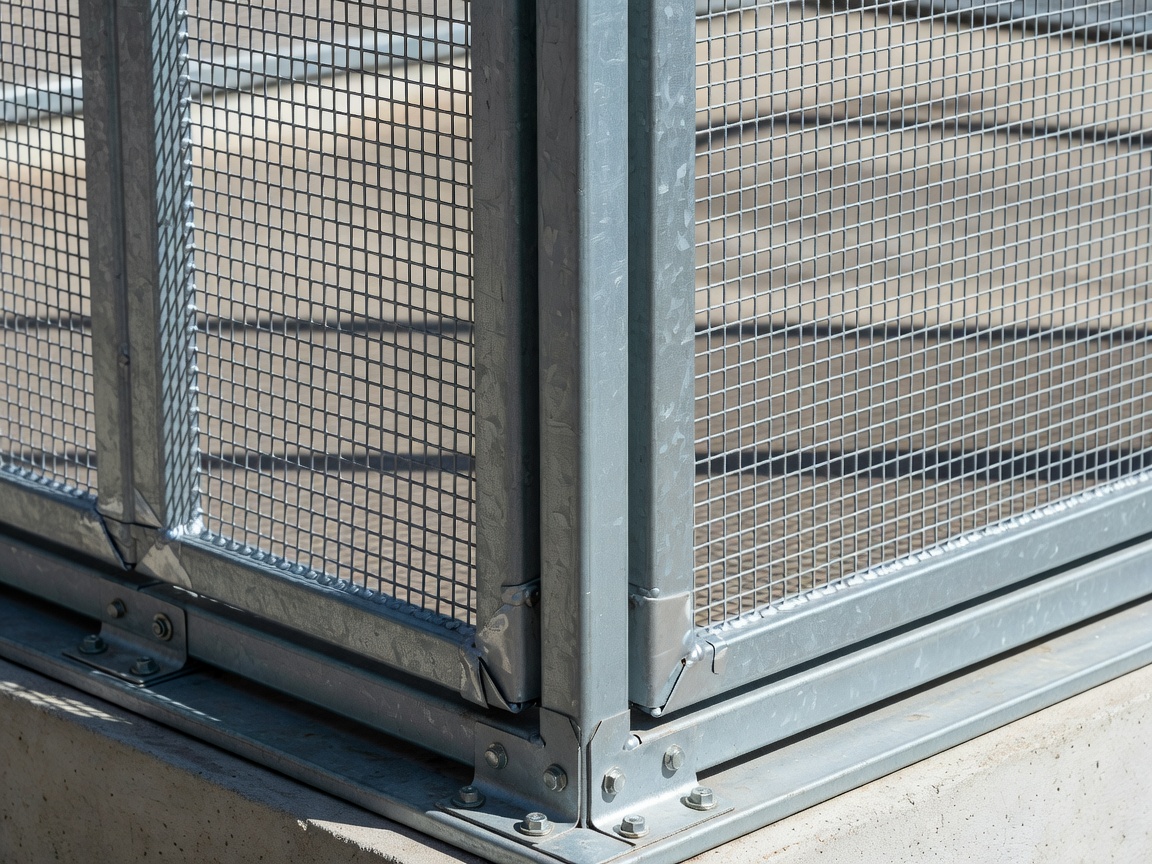
Mesh suitability depends on aperture, wire strength, coating, frame support and attachment method. Product labels such as poultry wire are not proof of predator resistance. A material that contains a bird may fail against an animal pushing, pulling or chewing from outside. Seek a specification appropriate to the predators present rather than relying on a universal opening size.
Check that birds cannot become trapped or injured against the mesh. Cover sharp cut edges and consider whether predators could reach through to resting birds. Perches should not force pigeons to sleep pressed against an exposed boundary. Ask the supplier about coatings and suitability for bird contact; avoid loose metal fragments and surfaces that birds can readily chew or ingest.
Concentrate on joints and doors
The join between mesh and frame is often more vulnerable than the centre of a panel. Fixings need to resist pulling and remain sound as timber moves and weather changes. Screws with appropriate washers or securely fitted battens may form part of a suitable detail, but the whole assembly must be assessed. Widely spaced light staples should not be assumed to provide a dependable barrier.
Doors need rigid frames, controlled gaps and latches that cannot shake loose or be manipulated by local animals. A secure secondary catch can reduce accidental opening. Where the footprint allows, a properly designed double-door entry reduces escape risk, but it must not become a trapping corridor or block emergency access. Keep the closing routine simple enough for a backup keeper to follow.
Finish the roof and ground connection
Check eaves, roof overlaps, service penetrations and the junction between roof and wall. Openings intended for ventilation still need suitable protective construction. Avoid blocking them with solid material simply because a gap looks worrying; redesign the barrier while preserving airflow. Roof details also need to shed rain without creating hidden damp timber or loose edges that wind can lift.
At ground level, address digging and gaps under the frame. Suitable solutions depend on the surface, drainage and nearby services. Any buried mesh or ground apron requires thoughtful design, protected edges and safe installation. Do not dig without checking underground utilities. On balconies and roofs, do not drill or add heavy materials without the property owner's permission and professional structural guidance.
Reduce attractants without harming wildlife
Store feed in secure, appropriate containers and clear spills promptly. Remove waste through a route that does not contaminate clean storage. Check concealed areas behind equipment, where rodents may find shelter. Keep vegetation and stored items managed so the perimeter remains visible, while respecting wildlife and local rules.
Prevention should come before lethal control. Poison can endanger pigeons, pets and wildlife through direct exposure or secondary poisoning. Glue traps and improvised traps create serious welfare risks. If an infestation develops, use a qualified, legally compliant professional who understands the presence of birds and can explain a targeted, humane plan. Never use unselective methods to punish animals for approaching a food source.
Make inspection part of the habitat
Walk the perimeter regularly and after storms, maintenance or attempted entry. Check loose fixings, corrosion, timber decay, latch movement and new gaps. Press-test components safely without frightening birds or damaging the structure. Keep a short repair record so repeated movement in one corner is investigated rather than patched indefinitely.
If a breach occurs, first secure the birds in a suitable temporary space and account for every individual. Injured or shocked birds need veterinary assessment. Inspect the entire boundary before returning the flock, because the obvious damage may not be the only weakness. Protection is dependable when it remains maintainable: reachable seams, visible ground edges and replaceable parts are more useful than decorative complexity.