Think in paths, not isolated vents
Fresh air needs a way in, a route through occupied space and a way out. A large opening does little if furniture blocks the flow or a nearby wall turns it into a dead pocket. On a site sketch, mark likely intake and exhaust routes, then consider how changing wind direction affects them. The sheltered resting zone should receive fresh air without becoming the direct target of a persistent cold gust.
High-level outlets can help warm, moist air leave, while appropriately placed inlets supply replacement air. Their effectiveness depends on building shape, wind, temperature differences and obstructions. There is no universal vent dimension for every small loft. A competent designer can assess complex sites, especially enclosed courtyards, rooftop structures and installations close to neighbours' windows.
Keep weather protection separate from sealing
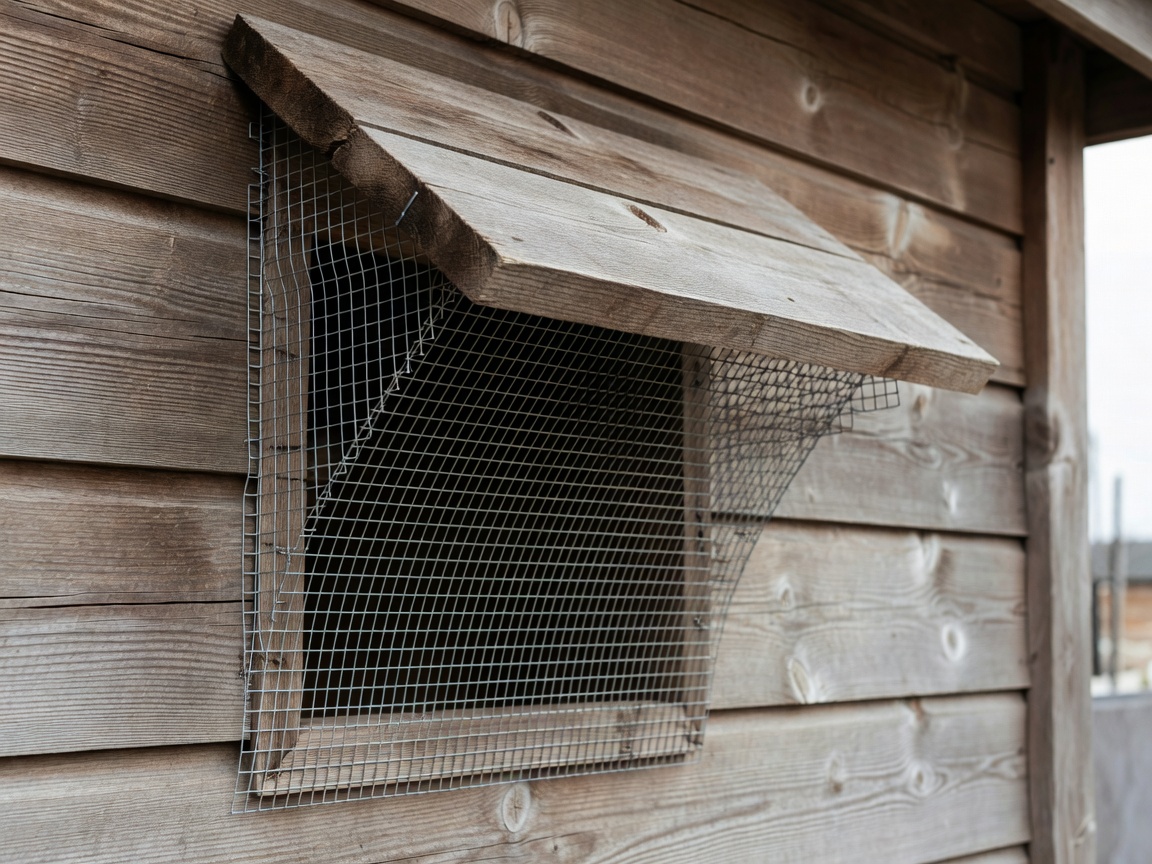
Rain baffles, roof overhangs and sheltered openings can reduce water entry while retaining airflow. Detail them so water drains outward rather than collecting in a hidden timber joint. Secure mesh behind or within the opening must remain inspectable. Fine screens can clog with feathers and dust, so an opening that looks adequate when new may perform poorly after weeks of use.
Do not close every opening because the weather turns cold. Moisture and contaminants still need to leave. Instead, review the direction of drafts, provide dry shelter and obtain advice appropriate to the birds and climate. Unwell, young or otherwise vulnerable birds may require a different managed environment under veterinary guidance, rather than a blanket change to the whole loft.
Find the source of dampness
Condensation, wet bedding and musty corners are signals to investigate, not simply reasons to add fragrance or another layer of litter. Check roof leaks, wind-driven rain, overflowing drinkers, poor drainage and cleaning water that cannot escape. A ventilation improvement will not repair a leaking seam, and a new roof will not solve excessive moisture from overcrowding or neglected waste.
Inspect beneath trays and behind removable panels. Surface dryness can hide damp material where air does not circulate. Remove wet contamination promptly and allow cleaned surfaces to dry before birds return. Keep feeding and watering stations easy to inspect so a slow leak does not become a permanent feature of the habitat.
Plan for city heat
Urban roofs and enclosed courtyards can retain heat long after the surrounding air begins to cool. Assess afternoon sun, reflected heat from walls and the temperature of roof materials. Provide reliable shade that does not block essential airflow. A sunshade must be secured for local wind conditions and positioned so it does not create entanglement or predator access.
Keep clean drinking water available and check it more often during hot weather. Persistent panting, wings held away from the body, weakness or loss of coordination need immediate attention; seek urgent veterinary advice for severe signs. Avoid chasing or unnecessary handling during heat stress. A thermometer at bird level helps reveal conditions, but no single reading replaces observation or a species-appropriate heat plan.
Use mechanical help carefully
A fan may support a considered ventilation design, but pointing one at a perch is not a complete solution. Fans can create drafts, noise and dust movement, and they need safe guards, suitable electrical installation and a maintenance plan. A system that depends on powered ventilation also needs a safe response to power failure. Keep cables protected from birds, moisture and rodents.
Avoid unflued fuel heaters, smoke, scented sprays, ozone generators and other devices that add airborne hazards. Birds have sensitive respiratory systems. Equipment marketed for domestic comfort is not automatically suitable for an occupied aviary. Ask an avian veterinarian about bird-specific risks and use qualified electrical professionals for installations exposed to weather or wash water.
Check performance without adding hazards
Observe conditions at the birds' height and in quiet corners, not only beside the doorway. Note condensation, settled dust, persistent dampness and how the loft changes after rain. Human smell is not a reliable air-quality monitor; an absence of obvious odour does not prove that the environment is safe. A noticeable ammonia-like smell calls for immediate investigation of waste, stocking and ventilation.
Do not use smoke, incense or aerosols to demonstrate air movement around birds. If technical airflow testing is necessary, arrange safe methods with a competent professional and keep birds away from any testing hazards. Review the design across seasons and after changes to neighbouring walls, roof coverings or flock size. Airflow is a living maintenance question, not a box ticked on opening day.